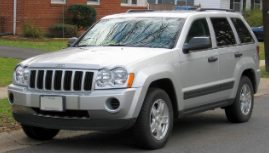
jeep grand 2005-2010 Common Problems & Issues
Grand Cherokee owners from this generation frequently report a heater that blows cold air regardless of setting, and an intermittent no-start/crank fault that can be frustrating to diagnose.
2
Critical
4
Moderate
0
Minor
Known Issues
Random No-Start / Intermittent Crank
CriticalOwners of the Jeep Grand Cherokee from 2005 to 2010 frequently report issues where the vehicle either won't start, only starts after multiple attempts, or exhibits dead accessory behavior. This widespread complaint often stems from TIPM-related faults (Totally Integrated Power Module), issues with the ignition switch or its associated wiring, or problems within the starter circuit itself. Sometimes, it can be as simple as a weak battery or poor ground connections. Diagnosing this requires checking battery load, scanning for U-codes, and inspecting the ignition feed and ground points. For a DIY approach, cleaning battery terminals, swapping accessible relays, or repairing obvious ground issues might help. Professional repair typically involves thorough wiring diagnosis, TIPM replacement and programming, or starter circuit repair. The Jeep Grand Cherokee 2010, in particular, shows notable reports concentrated in electrical categories.
No Heat / Blows Cold Air
ModerateMany Jeep Grand Cherokee WK owners, including those with the Jeep Grand Cherokee 2007, experience problems with the cabin heater blowing weak or cold air, or fluctuating temperature. This common issue is usually attributed to a faulty blend door actuator, a restricted heater core, air trapped in the cooling system requiring a coolant bleed, or a malfunctioning thermostat. To diagnose, verify the coolant level, check the temperature delta between heater hoses, observe blend door actuator movement, and scan for HVAC fault codes. Basic DIY fixes might include topping up and bleeding the coolant or attempting to access and fix the actuator if feasible. Professional service often involves a heater core flush or replacement, actuator replacement, or a comprehensive cooling-system service. This is a widespread complaint, especially in aging vehicles.
Airbag Light / SRS Warning
CriticalA persistent airbag light or intermittent SRS (Supplemental Restraint System) warning lamp is a significant safety concern reported by owners of the Jeep Grand Cherokee 2005 through 2010 models. Common causes include a faulty occupant restraint sensor, damaged wiring under the seats, a defective clock spring in the steering column, or issues with the SRS module itself. Diagnosis requires an SRS system scan to identify specific fault codes, along with a visual inspection of seat connectors and the wiring harness. DIY attempts might involve reseating connectors or fixing obvious under-seat wiring damage. Professional repair often entails replacing modules or sensors, repairing the clock spring, and performing necessary system calibrations. This is a widespread, safety-critical issue that should not be ignored, even if the underlying cause is a minor component. The Jeep Grand Cherokee 2009 is also prone to these electrical gremlins.
Electrical Drain / Multiple Module Faults
ModerateOwners of the Jeep Grand Cherokee WK, including the Jeep Grand Cherokee 2008, often experience battery drain, random warning lights, and misbehaving body electronics. These symptoms point to underlying electrical issues such as a faulty TIPM, a failing alternator, a parasitic draw, or module communication problems within the CAN bus system. Diagnosis involves performing a parasitic draw test to pinpoint the component draining the battery, a comprehensive charging-system test, and scanning for CAN fault codes. DIY steps might include battery replacement, fuse inspection, and cleaning battery terminals. Professional repair can range from replacing the alternator or TIPM to diagnosing complex module communication faults. This is a widespread complaint, often leading to electrical no-start issues if left unaddressed.
Brake/Steering Wear or Vibration
ModerateDrivetrain/brake complaints are common for the Jeep Grand Cherokee 2005-2010, manifesting as brake pulsation, pulling during braking, or a loose steering feel. These issues are typically caused by rotor warpage, worn control arm bushings, failing tie rods, or worn hub bearings. To diagnose, perform a brake runout check, a thorough front-end inspection, and a wheel-play test. DIY fixes may include replacing brake pads and rotors or ensuring tires are properly balanced. Professional repair often involves replacing control arms, hub bearings, or tie rods, followed by a wheel alignment. Maintaining these components is crucial for safety and handling, particularly as the vehicle ages. The Jeep Grand Cherokee 2006 is one model year where diligent brake maintenance is essential.
Engine Cooling/Overheating Issues
ModerateEngine cooling/overheating or gauge-related issues are a common complaint cluster for the Jeep Grand Cherokee WK, particularly affecting models like the Jeep Grand Cherokee 2005 and Jeep Grand Cherokee 2010. Symptoms can include engine overheating, erratic temperature gauge readings, or sudden loss of heat in the cabin. The root causes often involve a failing thermostat, a restricted radiator, a leaky water pump, or issues with the cooling system's integrity, such as air pockets or degraded coolant. Regular maintenance, including coolant flushes and inspections of the serpentine belt/tensioner, is critical. Diagnosis typically involves verifying coolant levels, checking for leaks, and testing the thermostat's function. Neglecting cooling system health can lead to accelerated engine wear and more expensive failures, making proactive monitoring essential for all WK Grand Cherokee owners.
What to Check Before Buying
Owning a 2005-2010 Jeep Grand Cherokee WK can be a rewarding experience, offering a blend of capability and comfort, but it requires a proactive approach to maintenance. The WK-generation, including the Jeep Grand Cherokee 2005, Jeep Grand Cherokee 2006, and Jeep Grand Cherokee 2007, is known for certain common problem areas, particularly electrical gremlins, cooling-system attention, and front-end wear. A complete service history is invaluable when purchasing one of these vehicles, as buyers know that deferred maintenance can quickly lead to high-cost repairs.
One of the biggest real-world maintenance insights is that neglecting fluids and cooling-system health drives a disproportionate share of expensive failures. The Jeep Grand Cherokee is sensitive to heat management, and operating in hot climates or heavy traffic makes this even more critical. Regular coolant flushes and inspections are paramount. For example, a failing thermostat or a restricted heater core can lead to engine overheating or HVAC/heat failures, which are common complaints. Do not ignore intermittent electrical faults; minor module or ground issues often escalate into strand-you problems later.
Owners should expect to address certain frequently replaced parts over the vehicle's lifespan. These often include batteries, alternators, brake pads and rotors, spark plugs (especially on the 3.7L V6 and 5.7L HEMI V8 engines), and front suspension control arms and bushings. Issues like rotor warpage and worn control arm bushings contribute to drivetrain/brake complaints and can lead to a loose steering feel. Addressing worn front suspension bushings and control arms early can prevent uneven tire wear and steering shake, improving both safety and ride quality.
Routine maintenance is conventional, involving frequent fluid checks, regular oil services, and spark plugs at longer intervals depending on the specific engine (such as the 4.7L V8 or 6.1L SRT8 V8). Transmission service is also crucial, and many owners delay it too long, leading to harsh shifts or heat damage. Following the recommended service intervals for differential/transfer case fluids and the serpentine belt/tensioner will also contribute to the longevity of your Jeep Grand Cherokee 2008 or Jeep Grand Cherokee 2009.
For those considering a Jeep Grand Cherokee 2010, or any model in this range, a thorough pre-purchase inspection is essential. The 2010 model year, like earlier versions, shows complaint clustering in electrical and engine categories, so a quick visual inspection is insufficient. A pre-purchase scan, road test, and under-hood heat and coolant inspection are highly recommended. This is especially true in regions with challenging environmental factors like high ambient heat and dusty conditions, which can exacerbate the WK’s electrical and cooling weaknesses. Using the correct coolant and ensuring proper battery maintenance are also key, as module stability on this generation is sensitive to voltage quality.
With good cooling and oil discipline, the engine can last 150,000 to 250,000+ miles, but neglected examples can fail much earlier. The transmission, if serviced regularly, can reach 120,000 to 200,000 miles. Suspension components like control arms and bushings typically need attention around 60,000 to 100,000 miles. Batteries usually last 3-5 years, sometimes less in stop-and-go driving or hot climates. Electronics are highly variable, with voltage health and water intrusion being major predictors of lifespan. Overall, a well-maintained WK Grand Cherokee can remain a capable and comfortable SUV for many years.
Where to Buy Parts
Frequently Asked Questions
Is the 2005 Jeep Grand Cherokee WK reliable?+
The Jeep Grand Cherokee 2005 can be reliable if it has received careful maintenance, but it's not a 'set and forget' vehicle. Owners commonly report electrical issues, cooling-system wear, and front-end suspension repairs as typical ownership expenses. A comprehensive service history is more indicative of reliability than mileage alone. A well-documented example offers a significantly different ownership experience compared to a neglected one, even if both appear similar initially.
Why does the 2007 Jeep Grand Cherokee WK randomly not start?+
Intermittent no-start behavior in the Jeep Grand Cherokee 2007 frequently points to electrical or control issues rather than a single mechanical failure. Common culprits include battery health, poor ground connections, relay circuit problems, issues with the starter feed, or module-related faults, often involving the TIPM. Since the problem can be sporadic, a proper diagnostic scan and tests for parasitic draw or voltage stability are typically more effective than simply replacing parts at random.
What should I inspect on a 2010 Jeep Grand Cherokee before buying?+
When buying a Jeep Grand Cherokee 2010, thoroughly check for any electrical warning lights, test HVAC function, assess charging-system health, look for cooling-system leaks, inspect brake condition, and check for front suspension play. The 2010 model year has shown concentrated complaints in electrical and engine categories. Therefore, a quick visual inspection is insufficient; a pre-purchase diagnostic scan, a comprehensive road test, and a detailed under-hood inspection of the cooling system are crucial steps.
How much does routine maintenance cost on the WK?+
Routine maintenance for the Jeep Grand Cherokee WK is generally moderate if performed on schedule. Basic services like oil changes, filter replacements, brake fluid flushes, and other wear items are typically affordable. However, costs can escalate rapidly if the transmission, cooling system, or electrical system is neglected. In practical terms, adhering to regular service intervals is considerably more cost-effective than facing a major no-start or HVAC repair down the line.
Is the WK a good choice for global markets?+
The Jeep Grand Cherokee WK can be a good choice for global markets if buyers prioritize comfort, capability, and parts availability, provided there's careful inspection and budget planning. Operating environments with high heat, dust, and heavy stop-and-go traffic can highlight the WK’s known electrical and cooling system weaknesses. A strong service history and access to a mechanic familiar with Jeep's electrical and cooling system diagnostics are significant advantages for long-term ownership.
What are common cooling system problems on the Jeep Grand Cherokee WK?+
Common cooling system problems on the Jeep Grand Cherokee WK, including the Jeep Grand Cherokee 2006 and 2008 models, often involve engine overheating, inconsistent temperature gauge readings, and reduced cabin heating. These issues are frequently linked to a failing thermostat, a blocked radiator, a faulty water pump, or air trapped within the system. Neglecting regular coolant flushes and inspections can lead to accelerated wear on critical components and potentially more severe engine damage, making proactive cooling system maintenance vital.
What are the signs of worn brakes and steering components on this model?+
Signs of worn brakes and steering components on the 2005-2010 Jeep Grand Cherokee WK include a pulsating brake pedal, the vehicle pulling to one side during braking, or a noticeable looseness in the steering feel. These symptoms can indicate issues such as warped brake rotors, worn control arm bushings, failing tie rods, or deteriorated hub bearings. Prompt inspection and repair of these drivetrain/brake complaints are essential for maintaining vehicle safety and precise handling, especially for models like the Jeep Grand Cherokee 2009.