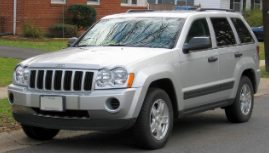
jeep grand 2005-2010 Spare Parts & Pricing
Grand Cherokee parts in Nigeria mostly come through US-focused importers, since Jeep never built a strong local dealer presence. Suspension struts and the fuel pump module are the priciest items; electrical and sensor parts are comparatively affordable.
Engine
| Part | Price Range | Availability | Interval |
|---|---|---|---|
| Spark plugs set Replacement interval depends on engine type and usage. Essential for engine performance and fuel economy, often replaced during a major service. Widely available for all Jeep Grand Cherokee WK models. | $25 – $70 | Widely available aftermarket | 60,000–100,000 miles (96,000–160,000 km) |
| Ignition coil pack Commonly replaced when experiencing engine misfires or rough idle. Often stressed by old spark plugs. A critical component in addressing random no-start issues or poor engine performance. | $30 – $110 | Good aftermarket support | As needed (diagnosed by misfire) |
Cooling
| Part | Price Range | Availability | Interval |
|---|---|---|---|
| Thermostat Crucial for regulating engine temperature and proper heater function. A failing thermostat can contribute to engine cooling/overheating or no heat/blows cold air symptoms. Replace with coolant flush. | $12 – $35 | Readily available aftermarket | About every 5 years or 100,000 miles (160,000 km) |
| Radiator A key component of the cooling system. Neglecting cooling-system health can lead to radiator failure. Replacements are common, especially in hotter climates where engine cooling is critical for the Jeep Grand Cherokee. | $110 – $260 | Strong aftermarket presence | As needed (leaks or restriction) |
| Water pump Circulates coolant through the engine. Failure can lead to rapid overheating and severe engine damage. Part of comprehensive cooling-system maintenance, critical for the Jeep Grand Cherokee's longevity. | $35 – $120 | Good aftermarket support | As needed (leaks, noise) |
Brakes
| Part | Price Range | Availability | Interval |
|---|---|---|---|
| Front brake pads Essential wear items for safety. Often replaced as part of a brake job along with rotors. Strong aftermarket availability for the 2005-2010 Jeep Grand Cherokee WK models. | $20 – $60 | Extremely common aftermarket | Varies (30,000–60,000 miles or by wear) |
| Front rotors Prone to rotor warpage, causing brake/steering wear or vibration. Typically replaced in pairs during a brake job. Good selection of aftermarket options for Jeep Grand Cherokee WK. | $60 – $180 | Extremely common aftermarket | Varies (with pads or when warped) |
Steering
| Part | Price Range | Availability | Interval |
|---|---|---|---|
| Outer tie rod Contributes to steering precision. Worn tie rods can cause loose steering feel and require replacement, often alongside an alignment. Important for addressing brake/steering wear or vibration issues. | $18 – $55 | Widely available aftermarket | As needed (inspection-based) |
Suspension
| Part | Price Range | Availability | Interval |
|---|---|---|---|
| Front lower control arm Worn control arm bushings are a common issue for the WK, leading to poor handling and tire wear. Refreshing these components early is recommended to prevent further problems. | $60 – $180 | Good aftermarket support | Around 60,000–100,000 miles (96,000–160,000 km) |
| Strut assembly Contributes to ride comfort and handling stability. Replacement can significantly improve the driving experience, especially when combined with other front suspension refresh items. Available for all WK years. | $90 – $280 | Widely available aftermarket | As needed (often 60,000–100,000 miles) |
Electrical
| Part | Price Range | Availability | Interval |
|---|---|---|---|
| Battery A frequent replacement item, especially in hot climates. Poor battery health can contribute to electrical no-start issues and multiple module faults in the Jeep Grand Cherokee WK. | $80 – $180 | Universally available | 3–5 years (sooner in hot climates) |
| Alternator Generates power for the vehicle's electrical system. A failing alternator can lead to battery drain and random warnings. Critical for stable module operation and preventing electrical drain/multiple module faults. | $120 – $300 | Good aftermarket support | As needed (charging system failure) |
Sensors
| Part | Price Range | Availability | Interval |
|---|---|---|---|
| Crankshaft position sensor A common cause of intermittent no-start or stalling issues. Relatively inexpensive but critical for engine operation. Diagnosis is key as symptoms can overlap with other electrical problems. | $20 – $60 | Common aftermarket availability | As needed (engine no-start or misfire) |
Fuel system
| Part | Price Range | Availability | Interval |
|---|---|---|---|
| Fuel pump module Delivers fuel to the engine. Failure can cause no-start conditions or poor engine performance. Replacement often involves accessing the fuel tank, so labor costs can be significant. | $120 – $350 | Good aftermarket support | As needed (fuel delivery issues) |
Transmission
| Part | Price Range | Availability | Interval |
|---|---|---|---|
| Transmission filter/service kit Essential for transmission longevity. Neglecting transmission service can lead to harsh shifts and premature wear. A critical part of routine maintenance for the Jeep Grand Cherokee WK. | $35 – $110 | Widely available aftermarket | 30,000–60,000 miles (48,000–96,000 km) |
Body
| Part | Price Range | Availability | Interval |
|---|---|---|---|
| Headlight assembly Replaced due to impact damage, excessive hazing, or failed internal components. Aftermarket units offer a cost-effective alternative to OEM for restoring visibility and appearance. | $60 – $220 | Common aftermarket availability | As needed (damage, hazing) |
Service
| Part | Price Range | Availability | Interval |
|---|---|---|---|
| Oil filter + air filter + cabin filter set Fundamental for routine maintenance. Regular replacement ensures engine health, clean cabin air, and optimal engine performance for the Jeep Grand Cherokee WK. Affordable and easy to source. | $20 – $60 | Universally available | Oil: 3,000–7,500 miles; Air/Cabin: 15,000–30,000 miles |
Buying Guide
When considering a 2005-2010 Jeep Grand Cherokee, understanding its common wear items and potential failure points is crucial for a wise purchase. Across all model years, including the Jeep Grand Cherokee 2005, Jeep Grand Cherokee 2006, Jeep Grand Cherokee 2007, Jeep Grand Cherokee 2008, Jeep Grand Cherokee 2009, and Jeep Grand Cherokee 2010, several areas warrant close inspection. Electrical issues are a frequent concern, often manifesting as intermittent no-start conditions, dead accessories, or module malfunctions. These can stem from problems with the Totally Integrated Power Module (TIPM), ignition switch, starter circuit, or basic battery and grounding connections. Owners of the Jeep Grand Cherokee 2010, in particular, have reported a higher incidence of these electrical gremlins. A thorough pre-purchase inspection should include a diagnostic scan to check for any stored trouble codes, especially U-codes related to module communication. The HVAC system is another area where owners report issues, commonly experiencing a cabin heater that blows cold air or has fluctuating temperatures. This is often due to faulty blend door actuators, clogged heater cores, or air pockets in the cooling system. Verifying proper coolant levels and checking for consistent heat output are essential checks. Cooling system health is paramount for the WK. Overheating issues can lead to severe engine damage, and components like the radiator, water pump, and thermostat are common replacement items. Inspect for any signs of leaks or coolant residue under the vehicle and in the engine bay. Pay close attention to the front suspension and steering components, as worn control arm bushings, tie rods, and strut assemblies can lead to poor handling, tire wear, and vibration. A visual inspection for torn bushings and a check for play in the wheels are important. For brake systems, check for rotor warpage, which often causes pulsation during braking, and ensure brake pads have adequate material remaining. The price for replacement parts like front brake pads and rotors can vary, but they are generally widely available in the aftermarket. The Jeep Grand Cherokee 2008, for instance, may require attention to these wear items. Owners should also be aware that these vehicles can be sensitive to heat, making robust cooling system maintenance critical, especially in warmer climates or in stop-and-go traffic, which can exacerbate electrical and cooling system issues. A vehicle with a documented service history, particularly one showing regular fluid changes and attention to cooling system maintenance, will likely offer a more reliable ownership experience. Neglected maintenance, especially regarding fluids and cooling, is a primary driver of expensive repairs on these models. When buying, prioritize vehicles that have been well cared for, as deferred maintenance on the Jeep Grand Cherokee 2009, for example, can lead to significant future expenses. A comprehensive pre-purchase inspection by a trusted mechanic, including a scan of all modules, is strongly recommended to uncover potential issues before you buy.
Common Accessories
OBD-II Scanner
Essential tool for diagnosing engine lights and reading vehicle trouble codes. Allows for quick identification of issues before they become major problems.
Shop on AmazonJump Starter Pack
Portable device to jump-start your vehicle without relying on another car. Useful for dead batteries, which are common on older vehicles.
Shop on AmazonTire Pressure Gauge
Accurate gauge to ensure tires are inflated to the correct pressure, improving fuel economy and tire life.
Shop on AmazonAll-Weather Floor Mats
Durable mats designed to protect the vehicle's carpet from mud, snow, and spills. Easy to clean and maintain.
Shop on AmazonRoof Rack System
Adds extra cargo-carrying capacity for gear, luggage, or outdoor equipment. Enhances the vehicle's utility for adventures.
Shop on AmazonDash Cam
Records driving footage for safety and potential insurance claims. Many models include parking mode for continuous monitoring.
Shop on AmazonWhere to Buy Parts
Frequently Asked Questions
Is the 2005 Jeep Grand Cherokee WK reliable?+
The 2005 Jeep Grand Cherokee WK can offer good reliability if it has been meticulously maintained throughout its life. However, it is not a vehicle that tolerates neglect. Owners frequently report common issues such as electrical problems, cooling-system wear, and front-end suspension repairs. Therefore, a comprehensive service history is far more indicative of reliability than just the mileage. A well-documented example of the Jeep Grand Cherokee 2005 will likely be a much better purchase than one with an unknown past.
Why does the 2007 Jeep Grand Cherokee WK randomly not start?+
Intermittent no-start behavior in a Jeep Grand Cherokee 2007 often points to complex electrical or control module issues rather than a single mechanical failure. Common culprits include problems with battery health, poor ground connections, faulty relay circuits, issues in the starter feed, or general module-related faults like those associated with the TIPM. Because the problem can be sporadic, a thorough diagnostic scan, along with parasitic-draw and voltage tests, is usually more effective than blindly replacing parts to address these electrical no-start issues.
What should I inspect on a 2010 Jeep Grand Cherokee before buying?+
Before purchasing a Jeep Grand Cherokee 2010, perform a detailed inspection focusing on key problem areas. Check for any active electrical warning lights, verify proper HVAC function, assess the charging-system health (battery and alternator), inspect for cooling-system leaks, examine brake condition, and check for excessive front suspension play. The 2010 model year shows particular complaint clustering in electrical and engine categories. Therefore, a quick visual inspection is insufficient; insist on a pre-purchase diagnostic scan, a thorough road test, and a careful under-hood inspection of the cooling system and fluids.
How much does routine maintenance cost on the WK?+
Routine maintenance for the Jeep Grand Cherokee WK is generally moderate if performed on schedule. Basic services like oil changes, filter replacements (oil, air, cabin), brake fluid flushes, and other common wear items are typically affordable. However, costs can escalate rapidly if major systems like the transmission, cooling system, or electrical components are neglected. Proactive and regular servicing, including attention to cooling-system health and fluids, is significantly more cost-effective than facing one major repair, such as an extensive no-start diagnosis or HVAC repair.
Is the WK a good choice for global markets with challenging conditions?+
The Jeep Grand Cherokee WK can be a good choice for global markets, even those with challenging conditions like heat, dust, or stop-go traffic, provided the buyer prioritizes careful inspection and budget discipline. These environmental factors can exacerbate the WK's known electrical and cooling weaknesses, making proactive maintenance even more critical. A strong service history, coupled with access to a local mechanic familiar with Jeep's electrical and cooling-system diagnosis, will be a major advantage for ensuring a reliable and long-lasting ownership experience.
What are common electrical issues on the 2008 Jeep Grand Cherokee?+
The 2008 Jeep Grand Cherokee, like other WK models, can experience various electrical issues. Common problems include intermittent no-start conditions, battery drain, and malfunctioning interior electronics. These often stem from issues with the TIPM (Totally Integrated Power Module), poor ground connections, or failing alternators. Owners should be vigilant for warning lights on the dashboard and ensure regular battery checks and charging system tests are performed to mitigate these electrical problems.
Where can I find affordable replacement parts for my 2006 Jeep Grand Cherokee?+
Affordable replacement parts for a 2006 Jeep Grand Cherokee are widely available through aftermarket suppliers. Online auto parts retailers, large chain auto parts stores, and specialized Jeep parts websites often offer competitive pricing on components like brake pads, rotors, filters, and suspension parts. While OEM parts from a dealership provide guaranteed fitment, aftermarket options from reputable brands can offer significant savings without compromising quality, provided you research the brand's reputation.
How often should I replace the cooling system components on a 2009 Jeep Grand Cherokee?+
For a 2009 Jeep Grand Cherokee, it's wise to inspect cooling system components regularly. While there isn't a strict replacement interval for all parts, the thermostat is often recommended for replacement around every 5 years or 100,000 miles. Radiators and water pumps are typically replaced as needed due to leaks or performance issues. A coolant flush every 2-3 years is also advisable to maintain system efficiency and prevent corrosion, which is crucial for preventing overheating and costly engine repairs.