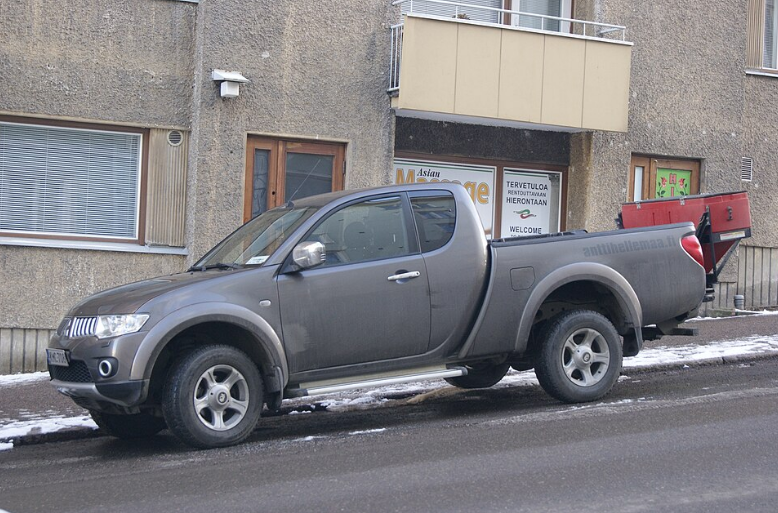
mitsubishi l200 2012-2020 Common Problems & Issues
The 2012–2020 Mitsubishi L200, also known globally as the Mitsubishi Triton, represents the latter half of the 4th Generation (KJ/KK/KL chassis) of this capable mid-size pickup truck. First introduced in 2005, this iteration received significant updates, including a major facelift in 2010 and further refinements between 2015 and 2016. It was designed with a focus on durability and off-road prowess, making it a popular choice for both commercial work and adventurous lifestyles. This generation offers a choice of robust diesel engines, primarily the 2.5L 4D56 turbo diesel and the later 2.4L 4N15 MIVEC turbo diesel introduced around 2014. Available in various configurations such as Single Cab, Club Cab, and Double Cab, the L200 caters to diverse needs. Its platform is shared with other Mitsubishi models, contributing to parts compatibility and shared mechanical knowledge. Despite its rugged reputation, like any vehicle, the 2012–2020 L200 has specific common issues that owners and prospective buyers should be aware of. These range from critical engine-related problems like overheating and head gasket failure to more moderate concerns such as leaf spring wear and electronic faults. Understanding these potential pitfalls, along with their symptoms, causes, and repair costs, is crucial for maintaining the longevity and reliability of a 2012 L200, a 2013 L200, a 2014 L200, a 2015 L200, a 2016 L200, a 2017 L200, a 2018 L200, a 2019 L200, or a 2020 L200. This guide aims to provide a comprehensive overview of these common problems, offering insights into diagnosis, repair options, and cost estimates in USD and NGN, alongside practical advice for owners to keep their vehicles in optimal condition.
1
Critical
4
Moderate
0
Minor
Known Issues
Overheating and Head Gasket Failure
CriticalOverheating is a critical issue that can lead to severe engine damage, including head gasket failure. Symptoms include coolant loss, visible bubbling in the radiator or expansion tank, white smoke from the exhaust, and a noticeable loss of engine power. Common causes include a weak or faulty radiator cap, a malfunctioning thermostat, a clogged EGR system, or simply neglected cooling system maintenance. Diagnosis involves checking for external coolant leaks, performing a radiator pressure test, and inspecting the EGR valve for carbon buildup. Minor DIY fixes might involve replacing the thermostat or cleaning the EGR valve. However, a blown head gasket often necessitates professional repair, which includes replacing the gasket set and potentially refacing the cylinder head to ensure a proper seal. For a 2014 L200, this can be a significant expense. The cost for DIY parts can range from $150 to $300, while professional repair, including parts and labor, typically falls between $800 and $1,500. In Nigerian Naira, this translates to approximately ₦150,000–₦300,000 for DIY parts and ₦800,000–₦1,500,000 for professional repair. This issue is widespread and can affect any 2012–2020 L200, especially those with the 4D56 or 4N15 diesel engines if cooling system maintenance is overlooked.
Leaf Spring Cracking or Sagging
ModerateThe rear leaf springs on the L200 are susceptible to cracking or sagging, particularly under heavy loads, frequent towing, or due to corrosion. Symptoms include a knocking sound from the rear suspension, an uneven or bumpy ride, and visible damage like broken leaves or excessive sagging. A visual inspection is usually sufficient for diagnosis. Owners can opt for DIY replacement of damaged leaf springs, though it requires proper tools and safety precautions. Professional replacement involves renewing both sides with new leaf springs and associated bushes for balanced performance. The cost for an aftermarket pair of leaf springs for a 2015 L200 typically ranges from $200 to $400, while OEM parts can cost between $400 and $700. Labor costs usually add another $150 to $250. In Naira, this means approximately ₦200,000–₦400,000 for aftermarket pairs and ₦400,000–₦700,000 for OEM, plus ₦150,000–₦250,000 for labor. This is a known wear issue, especially common in commercial applications or for a 2018 L200 used heavily off-road or for hauling.
Suction Control Valve Failure (P1272 Error)
ModerateA common issue affecting the diesel engines, particularly the 4D56, is the failure of the Suction Control Valve (SCV) located on the high-pressure fuel pump. This often triggers a P1272 diagnostic trouble code, leading to the check engine light illuminating, poor engine performance, rough idling, and stalling. Diagnosis involves scanning for the P1272 code and testing fuel pressure. The fix typically requires replacing the SCV and performing a calibration procedure known as SCV learning or SQL. While this can be a DIY task for those with mechanical experience, it often involves specialized tools for programming. Professional repair includes parts and labor, with the part itself costing between $150 and $300. The total cost for replacement and calibration usually ranges from $450 to $650. In Naira, this is approximately ₦225,000–₦450,000 for the part and ₦675,000–₦975,000 for the complete job. This fault can affect any 2012–2020 L200 equipped with the affected diesel engines.
Heater Matrix Leakage
ModerateInternal cabin comfort can be compromised by a leaking heater matrix. Symptoms include a persistent smell of antifreeze inside the cabin, foggy windows that are difficult to clear, and a gradual loss of coolant from the system. The root cause is usually corrosion or a pressure failure within the heater core itself. Diagnosis requires checking for coolant leaks around the heater hoses and matrix, often necessitating partial dashboard disassembly. Replacing the heater matrix is a complex job that typically requires extensive dashboard removal, making it labor-intensive. DIY replacement is challenging due to the intricate nature of the repair. Professional repair involves replacing the matrix and flushing the entire cooling system. Part costs for the heater matrix can range from $100 to $250, with labor adding $200 to $400, bringing the total estimated cost to $300–$650. In Naira, this is roughly ₦150,000–₦450,000 for the part and ₦300,000–₦600,000 for labor, totaling ₦450,000–₦975,000. This is a relatively common fault on vehicles with the 4D56 and 4N15 engines, including the 2016 L200 and 2019 L200.
EGR Valve Issues and Consequential Damage
ModerateThe Exhaust Gas Recirculation (EGR) valve on the diesel engines, particularly the 2.5L 4D56, is prone to carbon buildup. This can lead to the valve sticking open or closed, causing symptoms such as a rough idle, significant loss of power, increased emissions, and potentially triggering engine fault codes. Diagnosis involves scanning for EGR-related codes and visually inspecting the valve for carbon deposits. A common DIY fix is to thoroughly clean the EGR valve and the associated intake manifold passages. If the valve is beyond cleaning or has failed electronically, replacement is necessary. Professional repair often includes cleaning the intake system along with replacing the EGR valve. The cost of a replacement EGR valve typically ranges from $150 to $400. The total repair cost, including labor and cleaning, can range from $350 to $650. In Naira, this is approximately ₦225,000–₦600,000 for the part and ₦525,000–₦975,000 for the complete job. This is a widespread issue for diesel engines in the 2012–2020 L200 range.
What to Check Before Buying
Owning a 2012–2020 Mitsubishi L200, whether it's a 2014 model, a 2016 version, or a 2019 variant, can be a rewarding experience, given its reputation for durability and capability. However, like any vehicle, especially one designed for rugged use, proactive maintenance and awareness of common issues are key to long-term satisfaction and reliability. The L200's strengths lie in its robust diesel engines, particularly the 4D56 and 4N15, and its sturdy chassis, which make it suitable for demanding tasks and varied terrains. However, these engines and the truck's suspension components are also the sources of its most frequent problems.
Overheating and subsequent head gasket failure are perhaps the most critical issues to watch out for. The cooling system must be meticulously maintained. This means regular checks of coolant levels, replacing the radiator cap if it shows signs of weakness, ensuring the thermostat operates correctly, and performing coolant flushes according to the schedule, or even more frequently in harsh climates like Nigeria. The EGR system, prone to carbon buildup, should also be inspected and cleaned periodically, as a blocked EGR can contribute to overheating. Ignoring these signs can lead to catastrophic engine damage, turning a manageable repair into an engine rebuild costing upwards of $1,500 to $2,500 (₦1.5M to ₦3.75M).
The leaf springs on the rear suspension are another common wear item, especially for those who frequently carry heavy loads or tow. Regular visual inspections for cracks or sagging are essential. If one spring shows damage, it's best practice to replace both sides simultaneously to maintain balance and prevent uneven tire wear and handling issues. While aftermarket leaf springs are more affordable (around $200–$400 or ₦200,000–₦400,000 per pair), investing in quality parts can prevent premature failure.
For the diesel variants, the Suction Control Valve (SCV) on the high-pressure fuel pump is a known failure point, often indicated by a P1272 code. Addressing this promptly prevents drivability issues and potential further damage to the fuel system. The repair, including the valve and calibration, costs approximately $450–$650 (₦675,000–₦975,000). Similarly, the EGR valve itself can become clogged and malfunction, leading to poor performance. Regular cleaning of both the EGR valve and the intake manifold is a good preventive measure, typically recommended every 60,000–80,000 km.
Inside the cabin, a leaking heater matrix can cause discomfort and coolant loss. This repair is labor-intensive due to dashboard disassembly, making professional replacement costly, often in the range of $300–$650 (₦450,000–₦975,000). Owners should be attentive to any unusual smells of antifreeze or persistent window fogging.
Regarding maintenance, adhering to the factory service schedule is crucial, but it's often wise to adapt it for local conditions. For instance, in very hot and dusty environments, shortening the intervals for oil filter changes, air filter inspections, and coolant checks can extend component life. The 4D56 and 4N15 engines use timing chains, which are generally more durable than timing belts and don't require replacement at fixed intervals, though they should be inspected periodically. Using high-quality fuel and adhering to the recommended fuel filter replacement schedule (around every 24,000 km) is also vital for the health of the fuel system and the SCV.
When purchasing a used 2012–2020 L200, pay close attention to the maintenance history. Records of regular cooling system flushes, timely replacement of filters (oil, air, fuel), and any suspension work (especially leaf springs) can indicate a well-cared-for vehicle. A thorough pre-purchase inspection by a trusted mechanic, focusing on the common problem areas mentioned above, is highly recommended. For models in Nigeria, checking for signs of rust, particularly around the chassis and suspension components, is also important. Given the L200's robustness, with diligent maintenance, many owners can expect to see well over 300,000 km, with some reaching 400,000 km or more before requiring major overhauls.
Where to Buy Parts
Frequently Asked Questions
Is the 2014 Mitsubishi L200 reliable for long-term ownership in Nigeria?+
The 2014 Mitsubishi L200, particularly with the 2.5L 4D56 diesel engine, is considered reliable for long-term ownership in Nigeria, provided the cooling system is diligently maintained. Overheating and head gasket issues are the primary risks, especially in hot, dusty conditions. Regular oil changes, coolant flushes, and EGR cleaning are vital. With proper care, these trucks can reliably exceed 300,000 km.
What are the most common problems on the 2016 Mitsubishi L200?+
Common issues reported for the 2016 L200 include cracking or sagging rear leaf springs, overheating often linked to EGR blockages or radiator cap issues, and P1272 error codes related to the suction control valve. Heater matrix leaks causing interior smells and fogging are also noted. Regular inspections and preventive maintenance are key to mitigating these problems.
How much does it cost to replace leaf springs on a Mitsubishi L200 in Nigeria?+
Replacing leaf springs on a Mitsubishi L200 in Nigeria typically costs between ₦400,000 and ₦1,000,000 for a pair, including parts and labor. Aftermarket leaf spring pairs generally range from ₦250,000 to ₦400,000, while OEM parts can cost up to ₦750,000. Labor adds approximately ₦150,000 to ₦250,000. It's recommended to replace both sides simultaneously.
What is the recommended maintenance interval for the Mitsubishi L200 2019 in hot climates?+
For a 2019 L200 in hot climates like Nigeria, it's advisable to shorten the standard maintenance intervals. Engine oil and filter changes should ideally occur every 4,000–5,000 km, rather than the standard 6,000 km. Air filters and EGR systems require more frequent checks, perhaps every 12,000–24,000 km. Coolant system inspections should be more thorough and frequent than the factory schedule suggests.
Are there any major recalls for the 2012–2020 Mitsubishi L200?+
There are no widespread, core mechanical recalls specifically affecting the 2012–2020 Mitsubishi L200 related to issues like overheating or leaf springs across all markets. Some region-specific recalls might exist for items like airbag components or minor corrosion issues. It is always best to verify recall status for a specific vehicle using its VIN through official Mitsubishi channels or national safety databases.