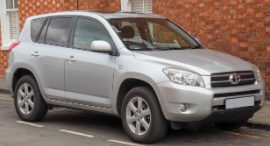
toyota rav4 2006-2012 Spare Parts & Pricing
This RAV4 generation shares its 2AZ-FE engine with several other Toyota models, so piston and timing chain parts are well documented and reasonably available, if not cheap. Electrical parts like the alternator are comparatively affordable.
Engine components
| Part | Price Range | Availability | Interval |
|---|---|---|---|
| Oil filter Essential for engine health, trapping contaminants from engine oil. Aftermarket options are generally reliable and cost-effective. Frequent replacement is key to preventing premature engine wear, especially in dusty or demanding conditions. Always use a quality filter. | $8 – $15 | Widely available (OEM, aftermarket, used) | Every 5,000 miles / 6 months |
| Timing chain kit Includes the chain, guides, and tensioner, crucial for engine timing. While designed for long life, wear can occur, leading to noise or timing issues. OEM is highly recommended for reliability, though quality aftermarket kits exist. This is a significant repair. | $150 – $500 | Available (OEM, aftermarket, used) | Inspect at 90,000 miles, replace if wear signs present (typically 120,000+ miles) |
| Piston & ring set (2AZ-FE revised) Specifically for addressing the known oil consumption issue in early 2AZ-FE engines. The revised OEM parts offer a durable solution. This is a major engine repair requiring significant labor. Aftermarket options should be chosen carefully for quality. | $200 – $600 | Available (OEM, aftermarket) | As needed, typically for excessive oil consumption on 2AZ-FE engines |
Cooling system
| Part | Price Range | Availability | Interval |
|---|---|---|---|
| Water pump Circulates coolant to prevent engine overheating. A common failure point as mileage increases. OEM or high-quality aftermarket units are recommended due to the critical role it plays. Inspect for leaks or noise during routine service. | $60 – $180 | Widely available (OEM, aftermarket, used) | Inspect at 60,000 miles, replace as needed (typically 80,000-120,000 miles) |
| Radiator Dissipates heat from the engine coolant. Can develop leaks or become clogged over time, leading to overheating. Aftermarket radiators are generally good quality and more affordable. Ensure proper coolant type and level after replacement. | $90 – $260 | Widely available (OEM, aftermarket, used) | Inspect every 6 months, replace if leaks or damage (typically 100,000-150,000 miles) |
Suspension parts
| Part | Price Range | Availability | Interval |
|---|---|---|---|
| Front control arm Connects the wheel hub to the vehicle's frame, critical for stability and handling. Bushings wear out over time, leading to clunking noises or poor alignment. Aftermarket options are generally reliable and more affordable than OEM. | $70 – $220 | Widely available (OEM, aftermarket, used) | Inspect at 30,000 miles, replace as needed (typically 100,000-180,000 miles) |
| Rear suspension arm (adjustable) Prone to corrosion and potential separation, particularly in areas with road salt. OEM parts are recommended due to the safety implications. Regular inspection and anti-corrosion treatment can extend its lifespan. Replacement requires professional alignment. | $90 – $260 | Widely available (OEM, aftermarket, used) | Inspect at 30,000 miles, replace as needed (typically 100,000-180,000 miles) |
Brake components
| Part | Price Range | Availability | Interval |
|---|---|---|---|
| Front brake pad set Essential for braking performance. Aftermarket options offer a wide range of performance and price points. Always replace as a set for even wear. Squealing or reduced braking effectiveness indicates wear. | $35 – $120 | Widely available (OEM, aftermarket) | Inspect every 5,000 miles, replace as needed (typically 30,000-60,000 miles) |
| Front disc Works with brake pads to stop the vehicle. Can warp or wear thin over time, causing vibrations during braking. Aftermarket discs are common and generally perform well. Replace in pairs for optimal braking balance. | $50 – $180 | Widely available (OEM, aftermarket) | Inspect every 5,000 miles, replace as needed (typically 60,000-100,000 miles) |
Steering components
| Part | Price Range | Availability | Interval |
|---|---|---|---|
| Intermediate steering shaft Connects the steering column to the steering rack. Known for developing a clunking noise, especially over bumps at low speeds, due to spline wear. OEM parts are often revised and recommended for a lasting fix. | $120 – $320 | Available (OEM, aftermarket, used) | As needed, typically after 70,000-100,000 km if clunking noise appears |
Electrical parts
| Part | Price Range | Availability | Interval |
|---|---|---|---|
| Power window master switch Controls all power windows from the driver's side. Prone to issues like sticky operation or, in rare cases, overheating due to internal contact wear. OEM replacement is advised due to past recall history and safety concerns. | $90 – $250 | Available (OEM, aftermarket, used) | As needed, if sticky operation or overheating occurs |
| Alternator Charges the battery and powers electrical systems. Failure leads to battery drain and electrical issues. Rebuilt units are common and cost-effective. OEM or reputable aftermarket brands are recommended for reliability. | $180 – $500 | Widely available (OEM, aftermarket, used) | Inspect at 120,000 miles, replace as needed (typically 100,000-150,000 miles) |
Fuel system
| Part | Price Range | Availability | Interval |
|---|---|---|---|
| Fuel pump (in-tank) Delivers fuel from the tank to the engine. Failure can cause no-start conditions or poor engine performance. OEM or high-quality aftermarket pumps are critical for reliable fuel delivery. Replacement can be labor-intensive. | $130 – $380 | Available (OEM, aftermarket, used) | Inspect at 120,000 miles, replace as needed (typically 100,000-150,000 miles) |
Sensors
| Part | Price Range | Availability | Interval |
|---|---|---|---|
| Oxygen sensor (upstream) Monitors exhaust gases to optimize fuel mixture. A faulty sensor can lead to poor fuel economy and illuminated check engine light. OEM sensors often provide more accurate readings for optimal engine performance. Easy to replace. | $60 – $180 | Widely available (OEM, aftermarket, used) | Inspect at 90,000 miles, replace as needed (typically 100,000-150,000 miles) |
Service items
| Part | Price Range | Availability | Interval |
|---|---|---|---|
| Air filter Protects the engine from dust and debris, ensuring clean air for combustion. Crucial for engine longevity and fuel efficiency. Aftermarket filters are readily available and cost-effective. Check and replace regularly, especially in dusty environments. | $20 – $70 | Widely available (OEM, aftermarket) | Every 15,000 miles / 12 months, or more frequently in dusty conditions |
| Cabin filter Filters air entering the vehicle's cabin, improving air quality and HVAC performance. Easily accessible for DIY replacement. Regular changes prevent unpleasant odors and ensure efficient climate control. Aftermarket options are plentiful and affordable. | $12 – $45 | Widely available (OEM, aftermarket) | Every 15,000 miles / 12 months, or more frequently in dusty conditions |
Buying Guide
The 2006-2012 Toyota RAV4 (XA30) generally enjoys a strong reputation for reliability, but prospective buyers should be aware of several common issues that can arise. Understanding these potential problems and their associated repair costs is crucial for a well-informed purchase and long-term ownership. For the Toyota RAV4 2006 and Toyota RAV4 2007 models, a significant concern is excessive oil consumption, particularly with the 2.4L 2AZ-FE engine. Symptoms include rapid oil level drops and potential blue smoke under heavy load. This stems from the original one-piece oil control piston rings. Professional repair involves replacing pistons and rings with a revised design, costing $2,000-$4,000. Owners of these model years should check for service records or be prepared to monitor oil levels diligently. Another issue prevalent in 2006-2008 models is corrosion and potential separation of the rear suspension arm, especially in regions with road salt or high humidity. Clunking noises or instability over bumps are symptoms. Regular visual inspection for rust is essential. Replacing the arm(s) and performing a wheel alignment can cost $300-$600 per arm. In affected climates, regular undercarriage washing and anti-corrosion treatments are recommended. The steering intermediate shaft is a known weak point across all XA30 RAV4 models, often manifesting as a clunk or knock when turning at low speeds or over bumps, typically after 70,000-100,000 kilometers. This is due to play in the splined joint. Replacing the intermediate steering shaft with an updated part costs approximately $325-$650, including labor. Addressing this early improves steering feel. For all-wheel drive (AWD) models, noise from the rear differential coupling, like a growling or whining sound between 50-80 km/h, is a common complaint. This is usually due to wear in the front bearing within the electromagnetic coupling. Repair costs range from $217-$325 for just the bearing to $435-$1,304 for a full coupling replacement. Regular transmission fluid changes help prolong AWD component life. Finally, a serious safety recall affected 2006-2010 models concerning the power window master switch, which could overheat and pose a fire risk. Symptoms include sticky operation or melting. Replacement costs around $150-$300. Buyers should verify this recall has been addressed. For long-term ownership, the XA30 RAV4 engine typically lasts 250,000-350,000 miles, and the transmission 200,000-300,000 miles. Suspension components may need replacement between 100,000-180,000 miles. Regular maintenance, such as oil and filter changes every 5,000 miles, coolant flushes at 60,000 miles, and transmission fluid changes every 60,000-90,000 miles, is paramount. For 2AZ-FE engines, weekly oil level monitoring is critical. The Toyota RAV4 2011 and Toyota RAV4 2012 models benefit from the updates made throughout the generation, generally offering fewer early-life issues compared to the initial production years. Maintenance history significantly impacts resale value. While AWD models offer enhanced traction, FWD variants are simpler and avoid the rear coupling issue. Overall, a well-maintained XA30 RAV4 remains a reliable and practical choice.
Common Accessories
OBD-II Scanner
Diagnose check engine lights and other vehicle issues. Essential for troubleshooting modern vehicles.
Shop on AmazonJumper Cables
Essential for jump-starting a dead battery. Keep a set in your vehicle for emergencies.
Shop on AmazonTire Pressure Gauge
Maintain optimal tire pressure for safety, fuel efficiency, and tire longevity. Digital or analog options are available.
Shop on AmazonCar Cover
Protect your RAV4 from dust, sun, and weather elements when parked outdoors. Choose a breathable, water-resistant material.
Shop on AmazonDash Cam
Record your driving for safety and potential evidence. Many models offer front and rear recording capabilities.
Shop on AmazonAll-Weather Floor Mats
Protect your car's interior from dirt, mud, and spills. Durable and easy to clean, they maintain interior condition.
Shop on AmazonWhere to Buy Parts
Frequently Asked Questions
Is the 2007 Toyota RAV4 2.4L (2AZ-FE) reliable for long-term ownership?+
The 2007 RAV4 2.4L is mechanically robust but has a well-documented tendency for excessive oil consumption due to defective piston rings. If this issue has not been addressed or repaired with revised pistons/rings, owners should expect to monitor oil closely and potentially face a costly repair ($2,000-$4,000) at higher mileages. With proper maintenance and if the oil consumption issue is corrected, it remains a reliable compact SUV with strong longevity, making it a viable option for long-term ownership.
What are the main differences between the 2007 and 2009 Toyota RAV4 models?+
The 2009 model year introduced a significant facelift with revised exterior styling and improved interior quality and noise insulation. Mechanically, 2009+ models often feature the newer 2.5L 2AR-FE engine, which reduces the risk of oil consumption issues compared to the earlier 2.4L 2AZ-FE. The 2009+ models also gained access to a 6-speed automatic transmission on higher trims, an upgrade from the 4- or 5-speed automatics in 2006-2008 models. These updates generally make the 2009-2012 models more desirable.
How serious is the steering clunk on the Toyota RAV4 XA30, and how much does it cost to fix?+
The steering intermediate shaft clunk is a common issue, but it is not immediately dangerous. It typically presents as an audible clunk when turning over bumps at low speeds and can progressively worsen, affecting steering feel. The repair involves replacing the intermediate steering shaft with an updated part. The total cost, including parts and labor, typically ranges from $300-$440. Early repair is recommended to prevent further wear, restore proper steering feel, and ensure a comfortable driving experience.
Should I buy an AWD RAV4 XA30, considering the rear differential coupling issue?+
AWD RAV4 XA30s can be a good choice if the rear differential coupling has been inspected or replaced and the vehicle has a solid maintenance history. The rear coupling whine is a known issue, which Toyota addressed with a technical service bulletin. If the noise is present, the repair can cost between $435 and $1,304. For most urban driving, a FWD model is simpler and avoids this potential issue. However, AWD can be worthwhile if the coupling is in good condition and you require extra traction for varied driving conditions.
What maintenance intervals should I follow for a 2011 Toyota RAV4 in hot, humid, or dusty conditions?+
In challenging environmental conditions like hot, humid, or dusty climates, it is best to follow more frequent maintenance intervals than standard factory recommendations. This includes changing engine oil and filter every 5,000 miles or 6 months. Coolant levels should be checked every 6 months, with a full system flush recommended at 60,000 miles. Transmission fluid should be replaced every 60,000-90,000 miles. Owners of any 2AZ-FE engine should monitor oil levels weekly. Additionally, regularly inspect suspension arms and the underbody for corrosion.
What is the typical lifespan of major components like the engine and transmission in a 2010 Toyota RAV4?+
With proper and consistent maintenance, the engine in a 2010 Toyota RAV4, especially the 2.5L variant, can typically last between 250,000 to 350,000 miles. The automatic transmission is also quite durable, often reaching 200,000 to 300,000 miles. However, these figures can be significantly impacted by driving conditions, maintenance adherence, and addressing known issues like oil consumption promptly. Regular fluid changes and inspections are key to achieving these longevity benchmarks.
Where can I find reliable replacement parts for my 2008 Toyota RAV4?+
For your 2008 Toyota RAV4, you have several reliable options for sourcing parts. Genuine OEM parts are available through authorized Toyota dealerships. High-quality aftermarket parts can be found at major auto parts retailers, both online and in physical stores. Many owners also utilize online marketplaces for a wider selection and competitive pricing, but it's crucial to ensure the seller is reputable to avoid counterfeit or low-quality components. For critical components like engine parts or suspension, consider the reputation of the aftermarket brand.
What are the risks of using non-OEM brake pads and rotors on a 2012 Toyota RAV4?+
Using non-OEM brake pads and rotors on a 2012 Toyota RAV4 can offer cost savings, but there are potential risks. Lower-quality aftermarket parts may wear out faster, leading to more frequent replacements. They can also produce more brake dust, cause noise (squealing or grinding), or offer reduced stopping power, especially under heavy braking conditions. For safety-critical components like brakes, it's advisable to choose reputable aftermarket brands or OEM parts to ensure optimal performance and longevity.
Also worth reading
toyota rav4 2006-2012 Common Issues