Selling Your Car Privately vs Trading It In: A Complete U.S. Guide
Selling a car privately can produce a higher sale price, while trading it in at a dealership is usually faster and easier. The better choice depends on your vehicle’s condition, local demand, available time, outstanding loan balance, paperwork, and the after-tax amount you actually keep.
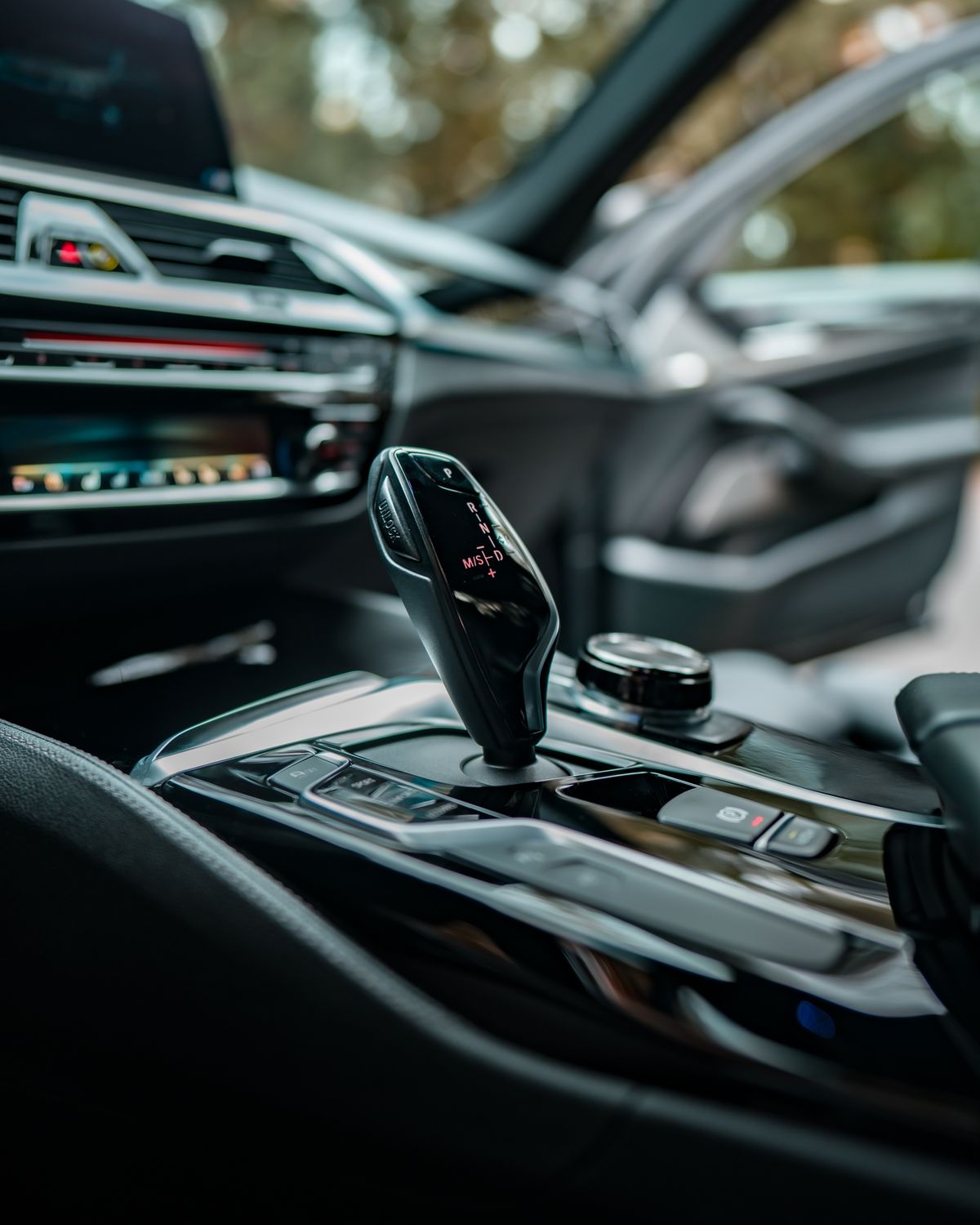
Selling a car privately can produce a higher sale price, while trading it in at a dealership is usually faster and easier. The better choice depends on your vehicle’s condition, local demand, available time, outstanding loan balance, paperwork, and the after-tax amount you actually keep.
In the United States, sellers commonly compare Kelley Blue Book (KBB) values, Edmunds estimates, dealer offers, online listings, and local market prices before deciding. A private sale may provide more negotiating power, but it also requires advertising, responding to buyers, arranging inspections, completing title documents, and protecting yourself during payment and handover.
A dealership trade-in simplifies the transaction because the dealer appraises your vehicle and applies its value toward another purchase. However, the trade-in offer may be lower than a private-party price because the dealer must account for reconditioning, financing, inventory, warranty obligations, advertising, and resale risk.
This guide explains how to compare both methods, prepare your vehicle, handle U.S. paperwork, understand general tax considerations, and calculate the option that produces the strongest practical outcome.
Private Sale or Trade-In?
The central comparison is not simply the advertised price. It is the net value after preparation costs, advertising, time, taxes, loan payoff, registration fees, and transaction risks.
| Factor | Private sale | Dealership trade-in |
|---|---|---|
| Potential selling price | Usually higher | Usually lower |
| Time required | Several days or weeks in many cases | Often completed during the vehicle purchase |
| Negotiation | Seller handles negotiations | Dealer controls appraisal and offer |
| Inspection | Seller must arrange or permit inspection | Dealer performs its own appraisal |
| Paperwork | Seller and buyer coordinate title and state requirements | Dealer often handles much of the transaction |
| Payment risk | Seller must verify funds | Dealer provides structured payment documentation |
| Tax treatment on replacement vehicle | Depends on state rules | Some states allow a trade-in credit against taxable purchase price |
| Convenience | Lower | Higher |
| Best suited to | Owners who want maximum proceeds and can manage the process | Owners who value speed, simplicity, or immediate replacement |
Kelley Blue Book defines Private Party Value as an estimate of what a buyer may pay another consumer, generally assuming an “as-is” sale. Its Trade-In Value estimates what a dealer may offer after considering appraisal, reconditioning, and resale costs. KBB also states that private-party value is usually higher than trade-in value because the private seller takes on the work that a dealer would otherwise perform.
When a private sale may make sense
A private sale may be worth considering when:
- Your car is clean, well-maintained, and in demand.
- You have a complete service history.
- The vehicle has a clear title and no unresolved lien.
- You can safely meet prospective buyers.
- You have time to advertise, answer questions, and schedule viewings.
- The expected price difference is greater than your preparation and transaction costs.
Popular U.S. vehicles such as the Toyota Camry, Honda Accord, Honda Civic, Toyota Corolla, Ford F-150, Chevrolet Silverado, Toyota RAV4, and Honda CR-V often attract broad used-car demand. Demand still varies by region, drivetrain, mileage, season, fuel prices, weather, and local preferences.
When trading in may be more practical
A trade-in may be more suitable when:
- You want to replace the vehicle immediately.
- You need a simple transaction.
- The vehicle requires repairs that would complicate a private sale.
- You have limited time for buyer appointments.
- You are uncomfortable handling payment and title documents.
- Your state provides a sales-tax benefit for the trade-in value.
- The vehicle has an outstanding loan and the dealer can coordinate the payoff.
A dealer may also accept a vehicle with cosmetic damage, worn tires, warning lights, or overdue maintenance, although those problems usually reduce the offer.
How to Price Your Car
Use several reference points rather than relying on one number. Pricing guides are estimates, not guarantees of what a specific buyer or dealer will pay.
1. Check KBB values
When using KBB, enter:
- Vehicle year, make, model, and trim.
- Mileage.
- ZIP code.
- Body style and factory equipment.
- Drive type and engine configuration.
- Vehicle condition.
- Whether you plan to sell privately or trade it in.
KBB’s condition categories commonly include Excellent, Very Good, Good, and Fair. Be realistic. Many vehicles are described as “Good,” but a car with major cosmetic damage, mechanical defects, worn tires, warning lights, or incomplete maintenance records may not qualify for that category.
The KBB estimate should be treated as a starting range. The final price can vary based on local listings, accident history, title status, service records, season, color, equipment, and whether the buyer is a consumer or a dealer.
2. Compare local listings
Search for vehicles with the same:
- Year and trim.
- Mileage range.
- Drivetrain.
- Exterior and interior condition.
- Accident or title history.
- Optional equipment.
- Geographic location.
Do not compare your car with a dealer’s retail listing as though it were a private-party value. A dealer’s advertised price may include preparation, financing-related pricing, dealership overhead, a warranty, and profit margin.
A private seller can use local listings to identify a realistic asking price, then leave a reasonable negotiation margin. An unusually low price may attract quick interest but reduce your proceeds. An excessively high price can cause the listing to remain active while similar vehicles sell.
3. Obtain dealer offers
Request more than one appraisal. Compare the written offers and check whether each offer is:
- A trade-in value conditional on purchasing another vehicle.
- A direct purchase offer with no replacement-car requirement.
- Subject to inspection or verification.
- Valid for a specific number of days.
- Reduced by fees, payoff amounts, or other deductions.
A dealer may present several figures at once, including the price of the replacement vehicle, financing payment, down payment, trade-in allowance, and amount owed on your existing loan. Keep these figures separate so you can compare the vehicle purchase and the trade-in independently.
4. Calculate expected net proceeds
Use this basic comparison:
[ \text{Private-sale net} = \text{Sale price} - \text{preparation costs} - \text{advertising costs} - \text{transaction costs} ]
For a trade-in, consider:
[ \text{Trade-in net benefit} = \text{trade-in allowance} + \text{possible tax savings} - \text{negative equity} ]
The exact tax calculation depends on your state. Some states calculate sales tax on the replacement vehicle’s price after subtracting the trade-in allowance; others provide little or no trade-in credit. Confirm the rule with your state’s revenue department or motor-vehicle agency.
Example
Suppose your car could sell privately for $18,500. You estimate $600 for tires and detailing, $150 for listing and payment-related costs, and value your time and travel at $400. Your approximate private-sale result would be:
[ $18,500 - $600 - $150 - $400 = $17,350 ]
A dealer offers $16,400. If your state provides a taxable trade-in credit and that credit saves $1,000 in sales tax, the effective trade-in benefit could be approximately $17,400 before considering other fees. In that scenario, the trade-in may be financially competitive despite the lower stated offer.
This is an illustration only. Sales-tax rates, credit limits, documentation fees, and vehicle values differ by state and transaction.
Preparing the Vehicle for Sale
You do not need to perform every possible repair before selling. The objective is to correct issues that affect safety, buyer confidence, or value without spending more than the improvement is likely to return.
High-value preparation steps
- Wash, vacuum, and clean the interior.
- Remove personal items and aftermarket clutter.
- Replace missing keys, floor mats, or owner documents when practical.
- Inflate tires to the manufacturer’s recommended pressure.
- Repair inexpensive defects such as burned-out bulbs or loose trim.
- Gather maintenance invoices and inspection records.
- Confirm that the VIN on the vehicle matches the title and records.
- Resolve or disclose warning lights and known mechanical problems.
- Check whether recalls remain open through the manufacturer or the National Highway Traffic Administration.
Avoid concealing accident damage, flood exposure, salvage history, odometer problems, warning lights, or known mechanical defects. Accurate disclosure protects the transaction and helps the buyer make an informed decision.
For a second opinion on a warning light or diagnostic trouble code, you can use Naira.autos’ OBD Codes tool. It can help explain what a code generally relates to, but it is not a substitute for testing by a qualified technician.
Repairs before sale
The following repairs may be reasonable when their cost is modest relative to the likely increase in buyer confidence:
| Issue | Possible effect on sale | Practical approach |
|---|---|---|
| Dirty interior | Makes the vehicle appear neglected | Professional or careful deep cleaning |
| Worn tires | Raises safety and immediate-cost concerns | Replace only if unsafe or severely worn |
| Cracked windshield | May affect inspection and safety | Check insurance and state requirements |
| Check-engine light | Reduces trust and may indicate costly work | Diagnose before advertising |
| Cosmetic scratches | Can reduce perceived value | Repair only when economical |
| Missing service records | Makes condition harder to verify | Gather digital and paper records |
| Brake noise | May indicate safety or maintenance concern | Have the braking system inspected |
Keep receipts for completed work. A buyer may pay more for documented maintenance than for undocumented claims that the vehicle was “recently serviced.”
Paperwork for a Private Sale
Vehicle ownership and sale procedures are controlled primarily by state law. Requirements can include a certificate of title, odometer disclosure, bill of sale, emissions or safety documentation, lien release, license plates, and a notice of sale.
Common documents
Most private transactions involve some combination of:
- The original certificate of title.
- A bill of sale.
- An odometer disclosure.
- A lien release, if applicable.
- Maintenance records.
- Emissions or safety inspection documents where required.
- A notice of transfer or release-of-liability filing.
- Copies of signed documents and payment records.
The precise requirements are not uniform nationwide. For example, New York DMV states that a seller must sign the title transfer section and a vehicle bill of sale, while the bill of sale should identify the vehicle, VIN, sale date, purchase price, and the names and signatures of buyer and seller.
California DMV explains that this notice helps identify the new owner for matters arising after the sale, but it does not itself transfer ownership; the buyer must still complete the title and registration requirements.
Before advertising the vehicle, visit your state DMV website and confirm:
- Whether the title must be notarized.
- Whether a bill of sale is mandatory.
- Whether plates remain with the seller or vehicle.
- Whether an emissions or safety inspection is required.
- How to report the sale.
- Whether the buyer must receive an odometer statement.
- What to do if the title is lost or a lien remains.
Do not sign over a blank title. Complete the buyer’s information, sale price, mileage, date, and other required fields accurately.
Selling a Car With a Loan
If you still owe money, contact your lender before accepting an offer. Ask for the current payoff amount, the date through which it is valid, the payment method, and the process for releasing the lien.
The payoff amount may differ from the balance shown on your monthly statement because of interest, fees, or payment timing. The Consumer Financial Protection Bureau recommends determining the amount owed and comparing it with the vehicle’s market value before selling or trading a financed car. It also advises checking the loan contract for any early-payoff penalty.
Positive and negative equity
- Positive equity: The vehicle is worth more than the loan payoff.
- Negative equity: The loan payoff exceeds the vehicle’s value.
- Break-even equity: The estimated vehicle value and payoff are approximately equal.
With positive equity, the sale proceeds can pay the lender and leave the remaining amount for you. With negative equity, you may need to pay the difference, obtain lender-approved financing, or add the balance to another loan. Rolling negative equity into a new vehicle loan can increase the amount financed and total borrowing cost.
Do not deliver the vehicle, keys, and signed title based only on a screenshot of a payment or an informal promise that the lender will be paid. Follow the lender’s documented payoff and lien-release procedure.
Safety and Payment Practices
Private sales carry transaction risks that do not usually arise in the same way at a licensed dealership.
Safer meeting practices
- Meet during daylight in a public location.
- Consider a police-station exchange area where available.
- Bring another adult.
- Allow a test drive only after checking the driver’s license and insurance.
- Accompany the buyer during the test drive.
- Do not disclose unnecessary personal information.
- Avoid allowing an unknown buyer to take the vehicle alone.
- Use a qualified mechanic for a pre-purchase inspection.
Cash, a verified bank wire, or a cashier’s check verified directly with the issuing bank may be used depending on the transaction. A cashier’s check can be counterfeit, so do not rely solely on a document shown by the buyer. Do not treat an email, text message, or payment screenshot as proof that funds have cleared.
Record the date and time of delivery, vehicle mileage, payment amount, buyer identity as required by state forms, and the documents exchanged. Keep copies securely.
Trading In at a Dealership
A dealer trade-in generally follows this sequence:
- The dealer inspects the vehicle.
- The dealer checks the VIN, title, mileage, and lien information.
- The dealer provides a trade-in allowance.
- The dealer calculates the purchase transaction.
- The dealer pays or coordinates the existing lender payoff.
- You sign trade-in, title, and purchase documents.
- The dealer takes possession of the vehicle.
The Federal Trade Commission’s Used Car Rule applies to most dealers that sell more than five used vehicles in a 12-month period. It requires dealers to display a Buyers Guide on used vehicles, including whether the vehicle is sold “as is” or with a warranty. The rule primarily protects the person buying a used vehicle from the dealer, but it also illustrates why dealers account for warranty and reconditioning costs when appraising trade-ins.
Avoid focusing only on monthly payment
A dealer can change the monthly payment by adjusting:
- Trade-in allowance.
- Replacement-vehicle price.
- Down payment.
- Loan term.
- Interest rate.
- Optional products and fees.
- Amount of negative equity rolled into the new loan.
Ask for an itemized worksheet showing:
- Vehicle selling price.
- Trade-in allowance.
- Payoff amount.
- Taxable amount.
- Sales tax.
- Title and registration fees.
- Dealer documentation fees.
- Optional products.
- Amount financed.
- Total finance charge and total of payments.
This makes it easier to compare a trade-in with an independent private-sale plan.
Tax Implications in the United States
Personal-use vehicle sold at a loss
For federal income-tax purposes, the IRS states that a loss from selling personal-use property, such as a personal car, generally is not deductible. If you sell the car for more than your adjusted basis, a taxable gain may potentially arise, although the facts and reporting requirements depend on the transaction.
Most personal vehicles decline in value, so many private sales do not create a federal taxable gain. However, do not assume that every vehicle is a personal-use loss. Different rules may apply to vehicles used in a business, held for investment, depreciated, or sold by a business. The IRS explains that selling, trading, or otherwise disposing of a vehicle may affect basis and gain or loss calculations.
Trade-in and sales tax
State and local sales-tax rules vary. In some states, a trade-in reduces the taxable purchase price of the replacement vehicle. In others, the trade-in may not provide the same benefit or may be subject to statutory limits.
For example, if a replacement vehicle costs $30,000 and a state allows a $10,000 trade-in credit, sales tax may be calculated on $20,000 rather than $30,000. The actual result depends on that state’s law, local tax rules, documentation, and whether the transaction qualifies.
Ask the dealer to show the taxable amount on the buyer’s order, and verify the rule with the relevant state revenue department. A private sale generally does not provide the same trade-in tax adjustment because you are not exchanging the old vehicle as part of the dealer purchase transaction.
Business vehicles
If the vehicle was used for business, tax treatment can involve depreciation recapture, adjusted basis, mileage methods, and business-use percentages. Those issues should be reviewed with a qualified tax professional.
Maximizing Your Car’s Value
Use this checklist before choosing a selling method:
- Obtain KBB private-party and trade-in estimates.
- Compare at least two dealer offers.
- Check comparable local listings.
- Gather service and repair records.
- Confirm the title is available and accurate.
- Obtain the lender’s current payoff amount.
- Estimate repairs realistically.
- Clean the car and photograph it in good lighting.
- Disclose accident, flood, title, mileage, and mechanical history.
- Calculate state sales-tax treatment.
- Separate the trade-in figure from the replacement-car price.
- Compare net proceeds rather than headline offers.
For a vehicle with uncertain history, Naira.autos’ VIN Checker Global and Mileage Explainer can help you organize questions about vehicle identity, reported history, and odometer context. These tools do not replace an official title search, state records, a vehicle-history provider, or a professional inspection.
You can also use the Used Car Evaluation tool to structure an assessment of condition, mileage, service history, visible defects, and ownership considerations before setting an asking price or reviewing a dealer offer.
Which Option Should You Choose?
A private sale is usually the stronger candidate when the expected price premium is substantial, your vehicle is easy to market, and you can safely manage the transaction. A trade-in may be the more efficient choice when the price difference is small, your state offers a meaningful trade-in tax credit, or you need to complete the replacement purchase quickly.
The most reliable comparison is:
[ \text{Private-sale net proceeds} \quad \text{versus} \quad \text{trade-in allowance} + \text{tax benefit} - \text{cost of negative equity} ]
Use documented figures, not only advertised values. KBB values, local listings, lender payoff statements, dealer worksheets, state DMV requirements, and tax rules each answer different parts of the decision.
Before handing over the vehicle, ensure the payment is verified, the title is completed correctly, the lien is addressed, the buyer receives required documents, and the sale is reported to your state authority when required.
This article is for educational purposes only and does not constitute professional, legal, financial, or mechanical advice. Consult a qualified professional for your specific situation.